
Why It Matters Before Applying for Financing
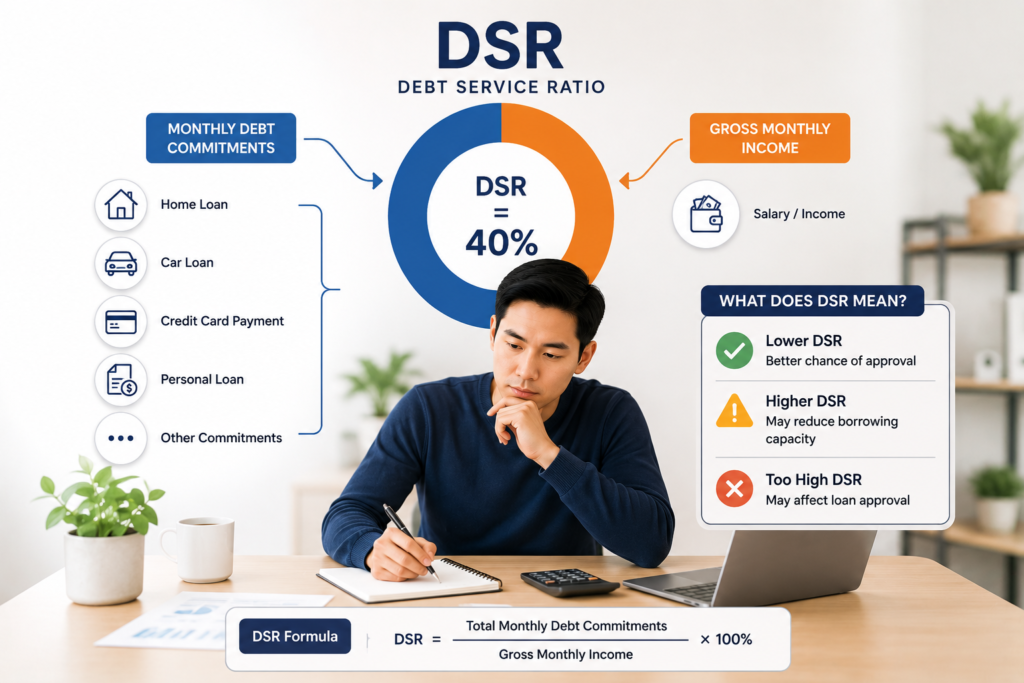
You’ve found a financing product that suits your needs, prepared the required documents, and you’re ready to submit your application.
Then someone asks,
“Have you checked your DSR?”
If you’re unfamiliar with the term, you’re not alone.
Many people hear about Debt Service Ratio (DSR) for the first time only after they begin exploring financing options. While it may sound technical, the concept is actually quite straightforward.
In simple terms, DSR helps measure how much of your monthly income is already committed to existing financial obligations. It provides financial institutions with a clearer picture of your repayment capacity before approving additional financing.
Understanding DSR doesn’t mean you need to become a financial expert. It simply helps you better understand your own financial commitments before making an important financial decision.
Quick Take
Before applying for financing, remember these key points:
- DSR looks at your existing monthly financial commitments.
- Income alone does not determine your repayment capacity.
- Lower monthly commitments generally provide greater financial flexibility.
- Every financial institution may have different assessment criteria.
- Understanding your DSR can help you prepare before applying.
What Is Debt Service Ratio (DSR)?
Debt Service Ratio, commonly known as DSR, is a way of comparing your monthly financial commitments with your monthly income.
Rather than focusing only on how much you earn, DSR helps assess how much of your income is already being used to meet existing repayment obligations.
For example, someone earning RM8,000 per month may not necessarily have stronger repayment capacity than someone earning RM5,000 if their monthly financial commitments are significantly higher.
This is why DSR is often considered together with other aspects of your financial profile during a financing assessment.
Why Is DSR Important?
Imagine two individuals earning exactly the same monthly salary.
Applicant A has only one vehicle financing commitment.
Applicant B has a vehicle financing, home financing, several credit card repayments and an existing personal financing.
Although both individuals earn the same amount each month, their financial commitments are very different.
This illustrates why financial institutions generally review more than income alone when assessing financing applications.
Understanding your DSR helps you gain a clearer picture of your own financial situation before taking on additional financial commitments.
What Financial Commitments May Be Considered?
Your monthly commitments may include:
- Home financing
- Vehicle financing
- Personal financing
- Credit card repayments
- Hire purchase commitments
- Other regular financing obligations
Depending on the financing product and assessment criteria, different commitments may be considered as part of the overall evaluation.
Example
Daniel earns RM6,500 each month.
His monthly commitments include:
- Home financing
- Vehicle financing
- Credit card repayment
Although his salary appears comfortable, a large portion of his monthly income is already committed to existing repayments.
Before applying for additional financing, Daniel reviews his financial commitments and decides to reduce his outstanding credit card balance first.
This improves his monthly financial flexibility and helps him better understand his financial position before submitting another application.
Can You Improve Your DSR?
The good news is that DSR is not fixed.
As your financial situation changes, your DSR may also improve.
Some practical ways to strengthen your overall financial position include:
Reduce Existing Debt
Paying down outstanding balances may reduce your monthly financial commitments over time.
Avoid Taking On Unnecessary New Debt
Applying for additional financing before reviewing your current commitments may increase your monthly obligations.
Increase Your Income
Career progression, salary increments or additional sources of stable income may strengthen your overall financial profile.
Plan Before Applying
Rather than applying immediately, take time to review your monthly commitments and understand your financial capacity first.
Preparation often leads to better financial decisions.
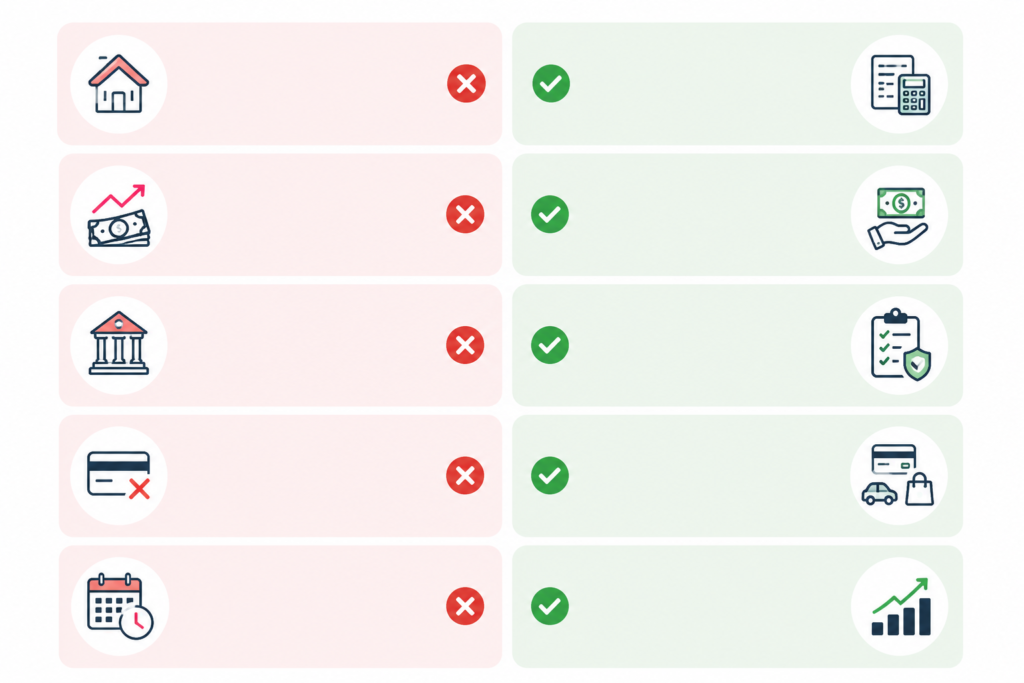
Common Misunderstandings About DSR
“I earn a high salary, so my DSR doesn’t matter.”
Income is important, but it is only one part of your financial profile.
Monthly financial commitments are equally important.
“DSR is the only thing financial institutions consider.”
Not necessarily.
Financial institutions generally consider several factors, including employment stability, repayment history, supporting documents and overall financial circumstances.
“If my DSR is high, I can never apply for financing.”
A higher DSR today does not necessarily mean the same situation in the future.
Reducing existing commitments and improving your financial profile over time may strengthen future applications.
Key Takeaways
Before applying for financing, remember:
- DSR helps measure your monthly financial commitments against your income.
- Income alone does not determine repayment capacity.
- Reviewing your financial commitments before applying can be beneficial.
- Improving your financial profile takes time and planning.
- Understanding your finances helps you make more informed decisions.
1. What is Debt Service Ratio (DSR)?
Debt Service Ratio (DSR) is a way of comparing your monthly financial commitments with your monthly income. It helps provide a clearer understanding of your repayment capacity before taking on additional financing.
2. Can I improve my DSR before applying for financing?
Yes. Managing your existing financial commitments responsibly, reducing outstanding debt where possible, and avoiding unnecessary new debt may help improve your overall financial profile over time.
3. Need Guidance Before Applying?
At Client Connect Advisory, we help clients understand important financing concepts such as DSR, prepare the necessary supporting documents, and better understand their financial profile before applying.